When I first moved to York County, Pennsylvania, I heard people talk about radon the way folks in Iowa talk about corn. It was just part of the landscape. I didn't think much of it until a home inspection turned up levels that made me stop. The EPA estimates that radon causes thousands of lung cancer deaths each year, and our area sits squarely in a zone where the gas is common. The Radon Zone Map for Pennsylvania shows most of the state, including York County, in Zone 1, which means the average indoor radon level is higher than the national average. That map is not a scare tactic. It is a tool built from real measurements taken across thousands of homes.
What Radon Is and Why It Gets Inside
Radon is a radioactive gas that comes from the natural decay of uranium in soil and rock. It moves up through the ground and into the air. Outdoors, it disperses quickly and causes no harm. Indoors, it can build up to dangerous levels. The problem is worst in basements and crawlspaces because those areas are closest to the soil. Homes act like big straws. The air pressure inside a house is usually lower than the pressure in the soil around it, so the house pulls radon in through cracks in the foundation, gaps around pipes, and openings around sumps.
I have seen homes where the basement floor had a hairline crack that ran the full length of the slab. That crack alone was enough to push radon levels above the EPA action level of 4 picocuries per liter. The fix for that particular home was not complicated, but it required the right approach. A radon mitigation system made the difference between a basement that felt safe and one that made the family nervous every time they went downstairs.
Passive versus Active Systems
Many newer homes are built with a passive radon system. That usually means a layer of gravel under the slab, a vent pipe running up through the house, and a cap on the pipe in the attic. The idea is that natural air pressure differences will draw radon out from under the slab and vent it above the roof. In theory, it works. In practice, a passive system often falls short, especially in homes where the soil is tight or the foundation has many entry points.
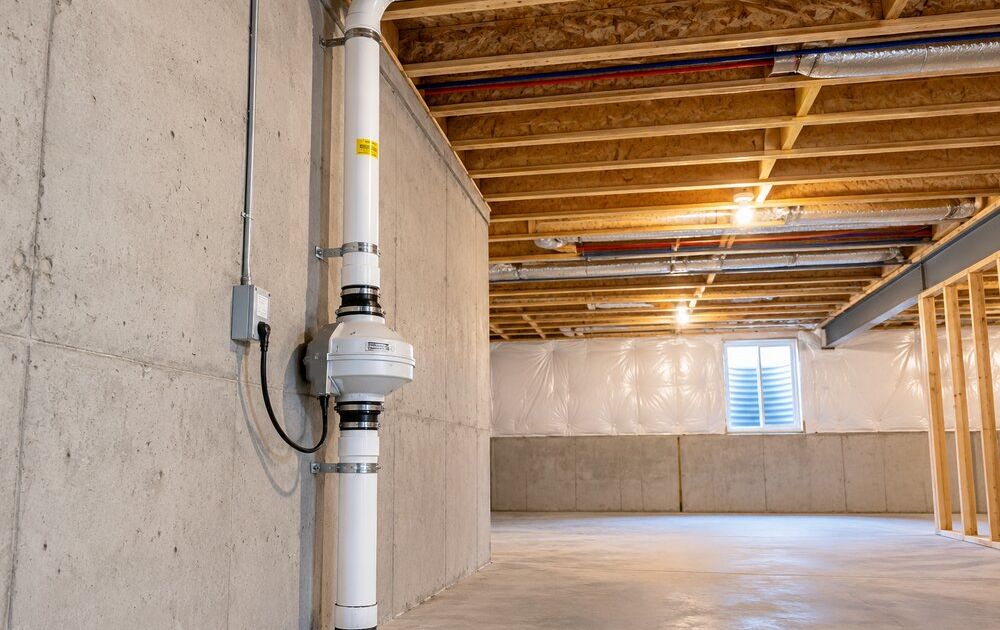
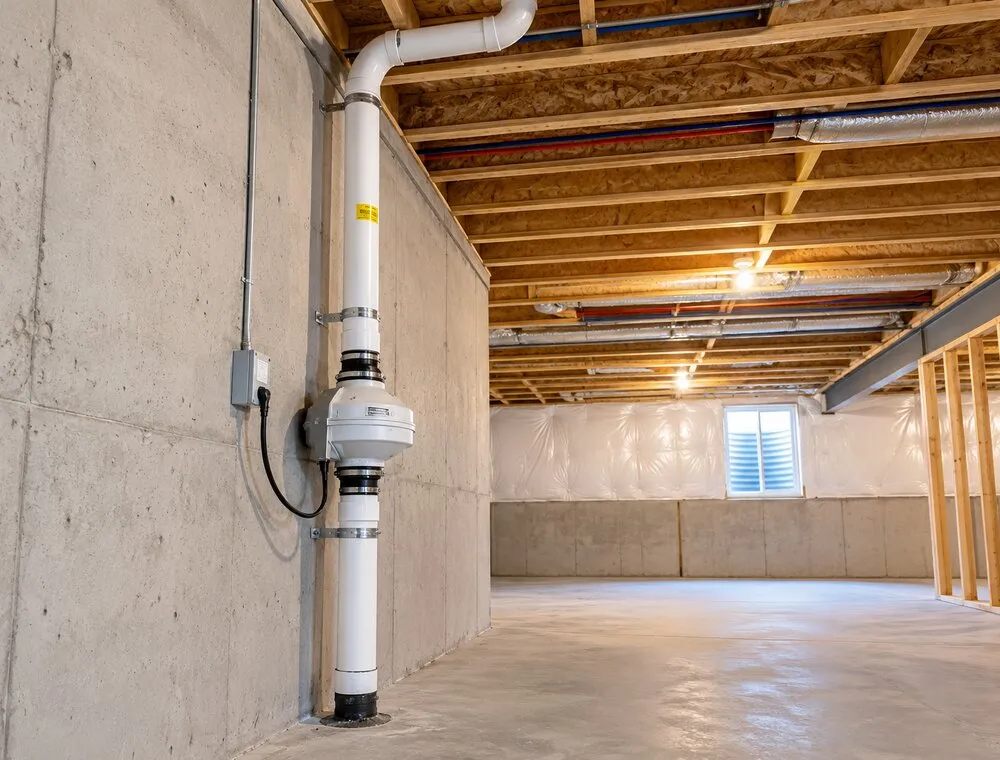
An active radon system adds a radon fan to that vent pipe. The fan creates suction under the slab, pulling radon-laden air from below the foundation and pushing it outside through PVC piping. This is called sub-slab depressurization, and it is the most common and effective method for reducing indoor radon levels. The fan runs continuously, and you can check its performance with a manometer, a simple gauge that shows whether the system is maintaining the right vacuum. If the manometer reading drops, you know something is wrong before radon levels start climbing again.
I have installed systems where the crawlspace was the main problem area. In those homes, the approach is a bit different. Instead of sub-slab depressurization, we use a crawlspace system that seals the crawlspace floor with a heavy vapor barrier and vents the space with a radon fan. The combination of sealant on the walls, a sealed liner on the dirt floor, and positive ventilation can bring radon levels down just as effectively as a slab system.
Testing Comes First
Before you install any radon mitigation system, you need to know what you are dealing with. A radon testing kit is cheap and easy to use. You can buy one at a hardware store or order one online. The kit usually includes a small canister or a continuous monitor. You place it in the lowest livable area of the house, leave it for a set period, and then send it to a lab for analysis. Short-term tests take two to seven days. Long-term tests take three months to a year and give a more accurate picture of the average level.
I recommend doing a short-term test first. If the result is above 4 picocuries per liter, do a follow-up test to confirm. If both tests show elevated levels, it is time to call a professional. Do not try to seal every crack yourself and hope that fixes it. Radon moves through soil like water through a sponge. You need a system that actively removes the gas from under the house, not just patches the visible openings.
What a Mitigation System Looks Like
A typical radon mitigation system has a few key parts. The first is a suction point, usually a hole cut into the basement floor or a sump pit dug under the slab. From that suction point, PVC piping runs to a radon fan mounted outside the living space, often in the garage or on the exterior wall. The fan discharges the gas above the roofline through more PVC piping. A manometer installed on the pipe in the basement shows the system is working. The whole thing sounds more complicated than it is. Most systems are installed in a single day, and the disruption to the house is minimal.
One thing I always tell homeowners is that a mitigation system is not a set-it-and-forget-it solution. You need to check the manometer every few months. If the reading drops, the fan may have failed or the piping may be blocked. You also need to retest the radon level every two years or after any major renovation that affects the foundation. The EPA recommends retesting after any significant change to the structure, and I agree.
I once worked on a house where the homeowner had installed a system five years earlier and never looked at it again. The manometer showed zero vacuum. The fan had burned out, and radon levels were back up to 8 picocuries per liter. A new fan fixed it, but the family had been living with elevated radon for who knows how long. That is why a simple check every few months matters.
Cost and Value
The cost of a radon mitigation system varies depending on the house design, the foundation type, and the labor rates in your area. In York County, a typical system runs between $800 and $1,500. That is a small price compared to the health risk. Radon exposure is the second leading cause of lung cancer after smoking, and it is entirely preventable. The value of knowing your home is safe goes beyond dollars.
Some people ask whether they can build a system themselves. I have seen DIY attempts, and I have seen them fail. The physics are simple, but the execution requires experience. You need to know where to place the suction points, how to seal the slab joints, and how to size the fan for the volume of air under the house. A professional also knows how to avoid creating a radon highway, where the suction pulls gas from one part of the house and distributes it to another. That kind of mistake makes things worse, not better.
RadonResistance and New Construction
If you are building a new home, you have a chance to get ahead of the problem. RadonResistance is a product line and building practice that integrates radon control into the construction process. It includes specialized sealants, vapor barriers, and venting components that make it easier to add an active system later if needed. Even if you build with a passive system, you can have the wiring and pipe chase in place for a future radon fan. That is a smart move in a county like ours where radon is common.
I have seen builders skip radon-resistant features to save a few hundred dollars. That is a false economy. Retrofitting a system later costs more and often requires cutting into finished floors. Spending the money upfront on a proper passive system and a pre-wired fan connection is one of those decisions you never regret.
Living with a System
After a radon mitigation system is installed, the house feels different in a way that is hard to describe. It is not a smell or a sound, though the fan does hum quietly. It is more the sense that the air you are breathing is clean. I have had homeowners tell me they sleep better knowing the system is running. That might sound dramatic, but when you know the numbers, it makes sense. A system that drops radon from 12 picocuries per liter to below 1 is doing real work every minute of every day.
The fan runs constantly, so the system uses electricity. A typical radon fan draws about as much power as a 60-watt light bulb. That adds maybe ten dollars a month to the electric bill. For that cost, you get the peace of mind that comes with a safe indoor environment. The manometer gives you a visual confirmation that the vacuum is holding. If you see the level drop, you know something changed and you need to investigate.
Ventilation also plays a role. A well-sealed house is more efficient, but it also traps radon if there is no system to remove it. That is why a combination of sealing and active venting works best. The sealant closes the gaps that let radon in, and the fan pulls the gas out from under the slab before it can enter the living space. Together, they form a barrier that is far stronger than either one alone.
In the end, a radon mitigation system is not a luxury. It is a practical response to a known risk in our area. York County homes, especially those with basements or crawlspaces, deserve the protection that a proper system provides. Whether you are a homeowner or a renter, testing your home and acting on the results is one of the smartest things you can do for your health. The Radon Zone Map put Pennsylvania on notice years ago. It is time we all paid attention.